Dental Implants
Dental implants, often called as the “third set of teeth,” involve placing an artificial root into the alveolar bone where teeth are missing, followed by an artificial crown, to restore both function and appearance.



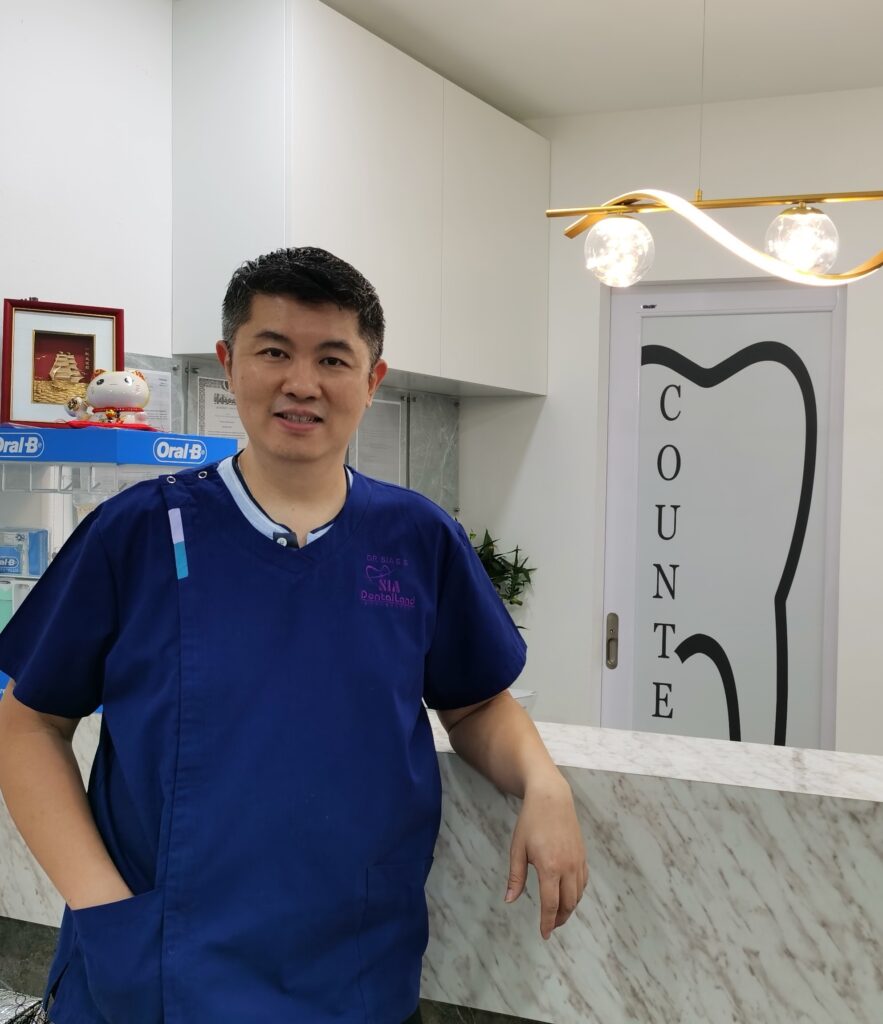
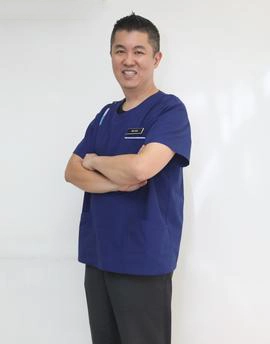
Welcome to Sia Dentalland Orthodontics Specialist Clinic. I am Principal Dr. Sia Sheau Soon. “Healthy Life, Healthy Teeth”. After more than 20 years of medical practice, I found that the elderly over 70 years old, those who have lost less teeth and have better masticatory functions have a very high quality of life and activity, which shows that the health of teeth and oral cavity and human health are important. closely related. As an orthodontist, we are committed to using professional banding techniques to achieve your healthy and perfect dental functions, and it is our duty to let you have a confident smile.
Welcome to Sia Dentalland Orthodontics Specialist Clinic. I am Principal Dr. Sia Sheau Soon. “Healthy Life, Healthy Teeth”. After more than 20 years of medical practice, I found that the elderly over 70 years old, those who have lost less teeth and have better masticatory functions have a very high quality of life and activity, which shows that the health of teeth and oral cavity and human health are important. closely related. As an orthodontist, we are committed to using professional banding techniques to achieve your healthy and perfect dental functions, and it is our duty to let you have a confident smile.
All instruments used during treatment are first soaked in a high-concentration cleaning solution, then manually cleaned using brushes or ultrasonic cleaners for the first wash.
After manual cleaning, instruments are dried, individually packed in disposable sterilization pouches, and sterilized. Instruments that exceed their storage validity period are re-sterilized.
Packaged instruments are placed in an autoclave (high-temperature, high-pressure sterilizer). All treatment instruments that enter the patient’s mouth meet the “one patient, one use, one sterilization” standard.
During treatment, the operating table is kept as clear as possible. Any unused instruments are also sterilized before use.
Maximum use of disposable items to prevent cross-contamination.
Hand hygiene and disinfection are performed before and after treating each patient. Disposable gloves, cups, bibs, and suction tips are changed for every patient.
After treatment, dental chairs, operating tables, chair backs, armrests, and spittoons are wiped with chlorine disinfectant.
Dental floss, cotton rolls, interdental brushes, dental applicators, surgical blades, and injection needles are all single-use and disposed of immediately after use.