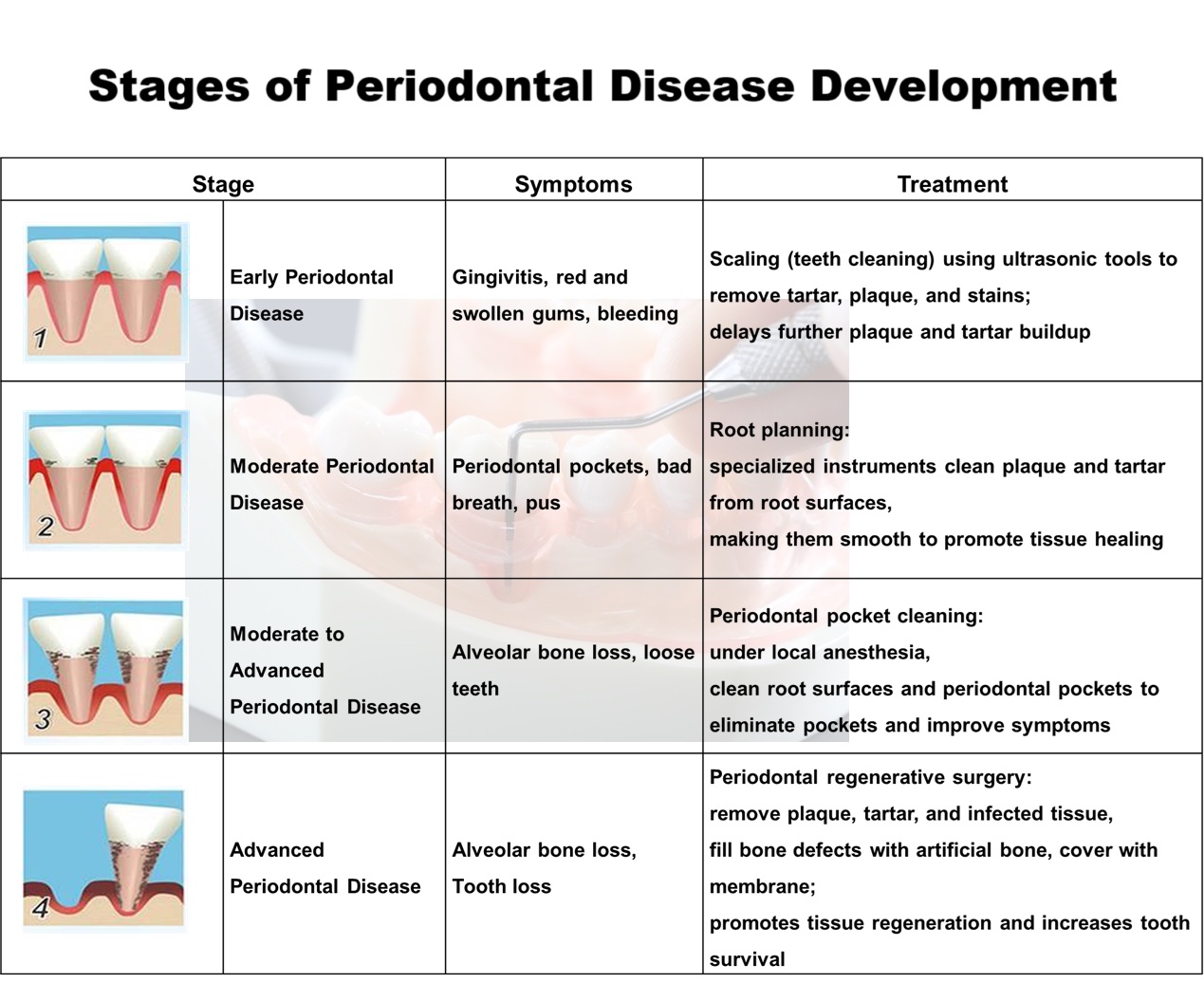
Periodontal
(gum disease)
Periodontal (gum disease) prevention & treatment
Signs and symptoms of periodontitis include
-
Swollen gums
-
Gums appear bright red, dark red, or purplish
-
Tenderness in the gums
-
Gums bleed easily
-
Toothbrush appears slightly pink after brushing
-
Bleeding when brushing or flossing
-
Bad breath
-
Pus between teeth and gums
-
Loose or missing teeth
-
Pain while chewing
-
Formation of new gaps or widening of existing gaps
-
Gum recession exposing parts of the tooth root, making teeth appear longer than normal
Which groups of people are prone to periodontal disease?
-
Accumulation of dental plaque (e.g., patients wearing dentures or specific orthodontic appliances for long periods)
-
Tartar buildup
-
Misaligned teeth, making them difficult to clean
-
Smoking
-
Stress (mental stress can reduce the body’s ability to fight disease)
-
Hormonal changes during pregnancy (During pregnancy, hormonal changes may cause an allergic-like reaction to toxins from dental plaque, making the gums prone to redness and bleeding)
-
Having systemic diseases such as diabetes, leukemia, or HIV
-
Taking certain medications, e.g., antihypertensive drugs (These medications can easily cause gum swelling, redness, and inflammation)