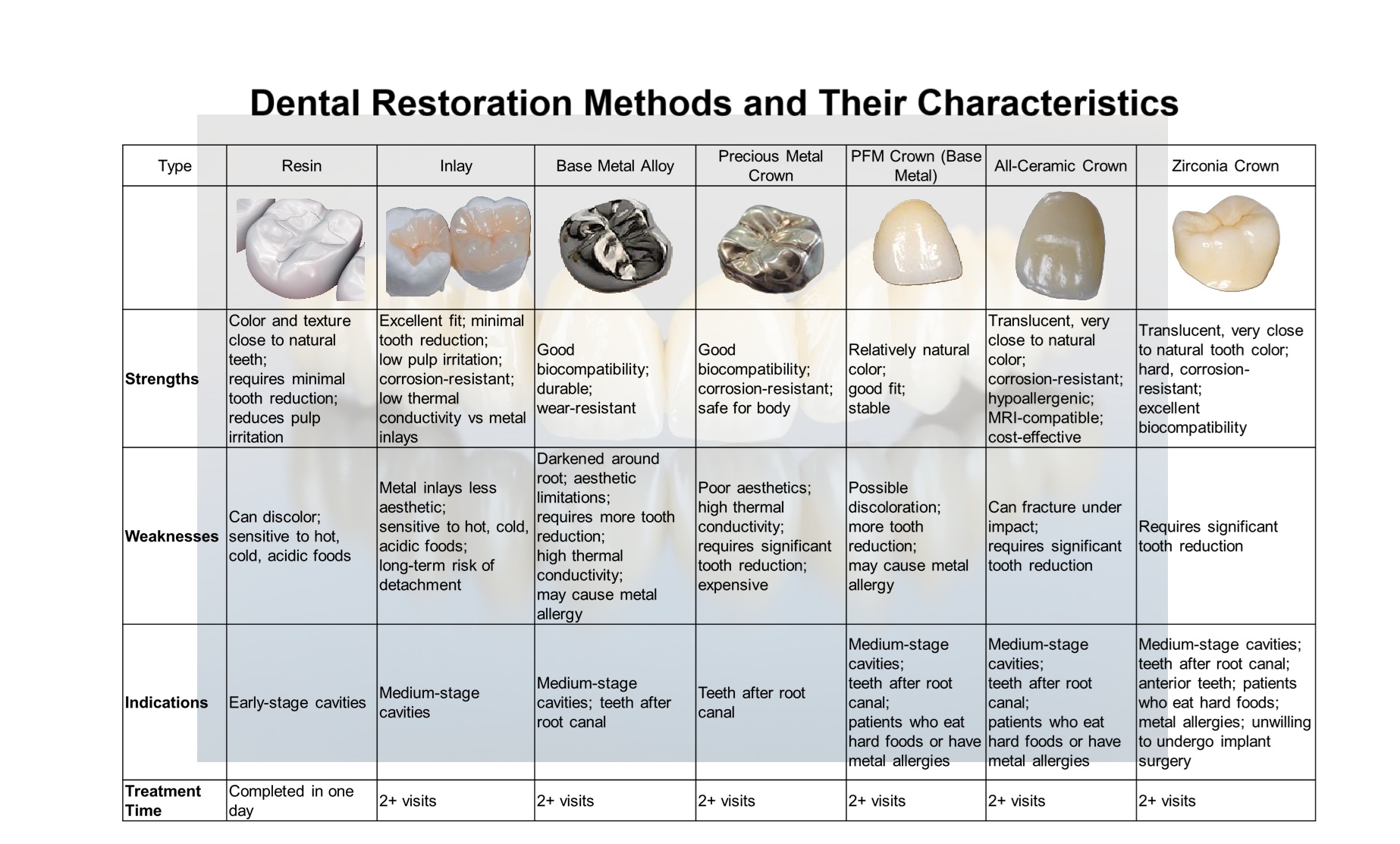
In cases of trauma, periodontal disease, or external impact causing tooth damage or tooth loss, artificial crowns or bridges can be used to restore chewing function.
Fixed Tooth Restoration – Artificial Crowns and Bridges
Suitable Candidates
-
Teeth with large areas of damage or hidden cracks
-
Teeth that have undergone root canal treatment and become fragile, prone to splitting or breaking, requiring a crown for protection
-
Missing or lost teeth
-
Teeth with unsatisfactory shape or color
What are the risks of dental veneer (porcelain veneer) treatment?
-
Tooth reduction: For veneer placement, a small portion of the tooth surface must be shaved down. This process is irreversible, and the greater the reduction, the more it may negatively affect tooth health.
-
Risk of fracture: Veneer material is relatively thin, so it may crack when eating hard or tough foods.
-
Risk of detachment: Veneers are bonded to the teeth with adhesive. Over time, the bond may weaken, causing them to come off. The risk is higher if you have the habit of biting hard objects with your front teeth.
-
Tooth sensitivity: After veneer treatment, teeth may become more sensitive because the reduced tooth surface is more exposed to external stimuli.
-
Cost: Veneers are generally more expensive compared to other cosmetic dental treatments.
-
Retreatment: If a veneer breaks or falls off, it will need to be replaced, requiring additional treatment.
-
Cavities: While veneers cover and protect the tooth surface, decay can still occur between the veneer and tooth, or even under the veneer itself.
-
Harmony with natural teeth: The color and shape of veneers may not perfectly match natural teeth.