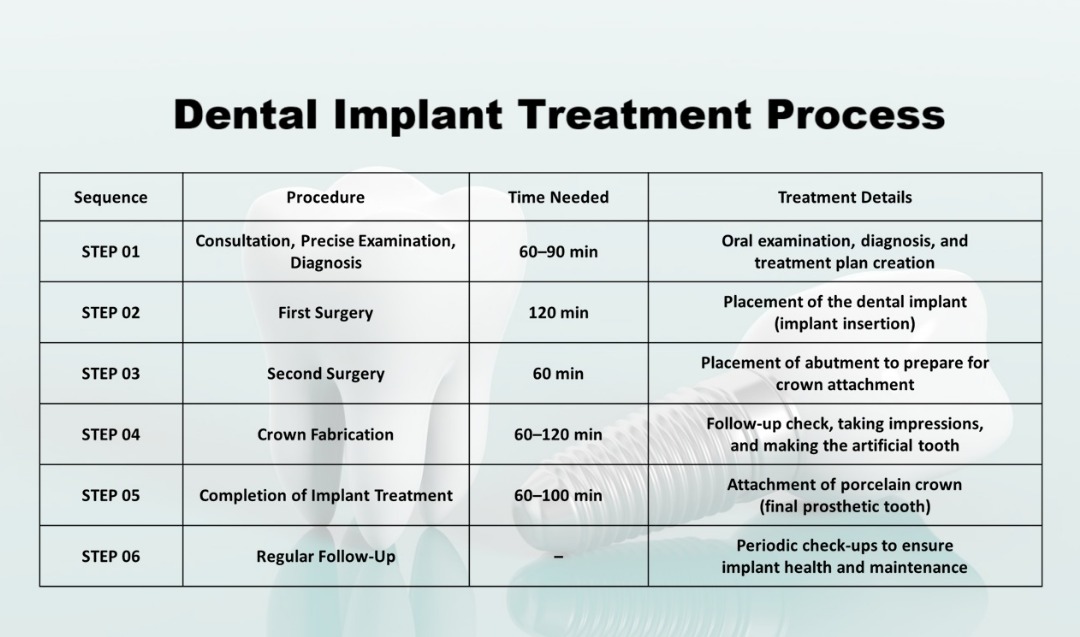
Dental implants, also known as the “third set of human teeth,” involve placing an artificial tooth root into the jawbone in areas with missing or lost teeth and attaching a prosthetic crown to restore both the function and aesthetics of the teeth.
Dental implants
Dental implants
Six Potential Problems Caused by Tooth Loss
- Supra-eruption of the Opposing Tooth
Upper and lower teeth maintain balance by contacting each other during chewing. When a tooth is missing, the opposing tooth loses its contact point and naturally begins to gradually elongate into the gap.
Consequences:
- Reduced chewing function: Excessive elongation of the tooth interferes with normal chewing.
- Tooth decay and wear: The root portion of the elongated tooth becomes exposed. This area lacks enamel protection, making it highly susceptible to decay.
- Difficulty preserving the tooth: Severely elongated teeth may ultimately require root canal treatment or even extraction.
- Shifting and Tilting of Adjacent Teeth
Teeth are closely arranged, supporting each other. When a tooth is lost, the adjacent teeth begin to tilt or shift into the empty space.
Consequences:
- Malocclusion: The overall alignment of the teeth and bite are disrupted.
- Cleaning difficulties: Irregular gaps and triangular spaces form between teeth, leading to food impaction and making cleaning with floss or a toothbrush very difficult.
- Bad breath and periodontal disease: These poorly cleaned areas become breeding grounds for bacteria, easily leading to cavities and periodontitis.
- Alveolar Bone Resorption
This is the most serious and irreversible problem. Tooth roots provide continuous stimulation to the jawbone under chewing pressure. Once this stimulation is lost, the bone is perceived as “no longer needed” and gradually begins to atrophy.
Consequences:
- Changes in facial morphology: Jawbone atrophy leads to sagging skin around the mouth, thinning lips, and increased wrinkles, resulting in an aged appearance that looks older than one’s actual age.
- Difficulty with dental implants: If a dental implant is desired later, insufficient bone volume may necessitate additional bone grafting surgery, significantly increasing cost, time, and treatment burden.
- Denture discomfort: Even with full dentures, continued bone resorption causes dentures to become unstable and can trigger pain.
- Chewing Dysfunction
The most basic function of teeth—chewing ability—is reduced.
Consequences:
- Indigestion: Insufficiently chewed food places a burden on the stomach and intestines.
- Nutritional imbalance: People may avoid hard-to-chew foods like meat, vegetables, and fruits, leading to biased eating habits and poorer nutritional status.
- Speech and Aesthetic Problems
Especially when front teeth are missing, pronunciation of sounds like “s”, “z”, “x”, becomes inaccurate, causing a whistling or air leakage phenomenon when speaking. The visible gap when smiling or talking can lower self-confidence and may lead to withdrawal from social activities. - Temporomandibular Joint Disorders
After tooth loss, there’s a natural tendency to chew only on the opposite side. This ultimately places an unbalanced load on both temporomandibular joints (TMJ).
Consequences: Symptoms may include jaw joint pain, headaches, and clicking or popping sounds when opening or closing the mouth.
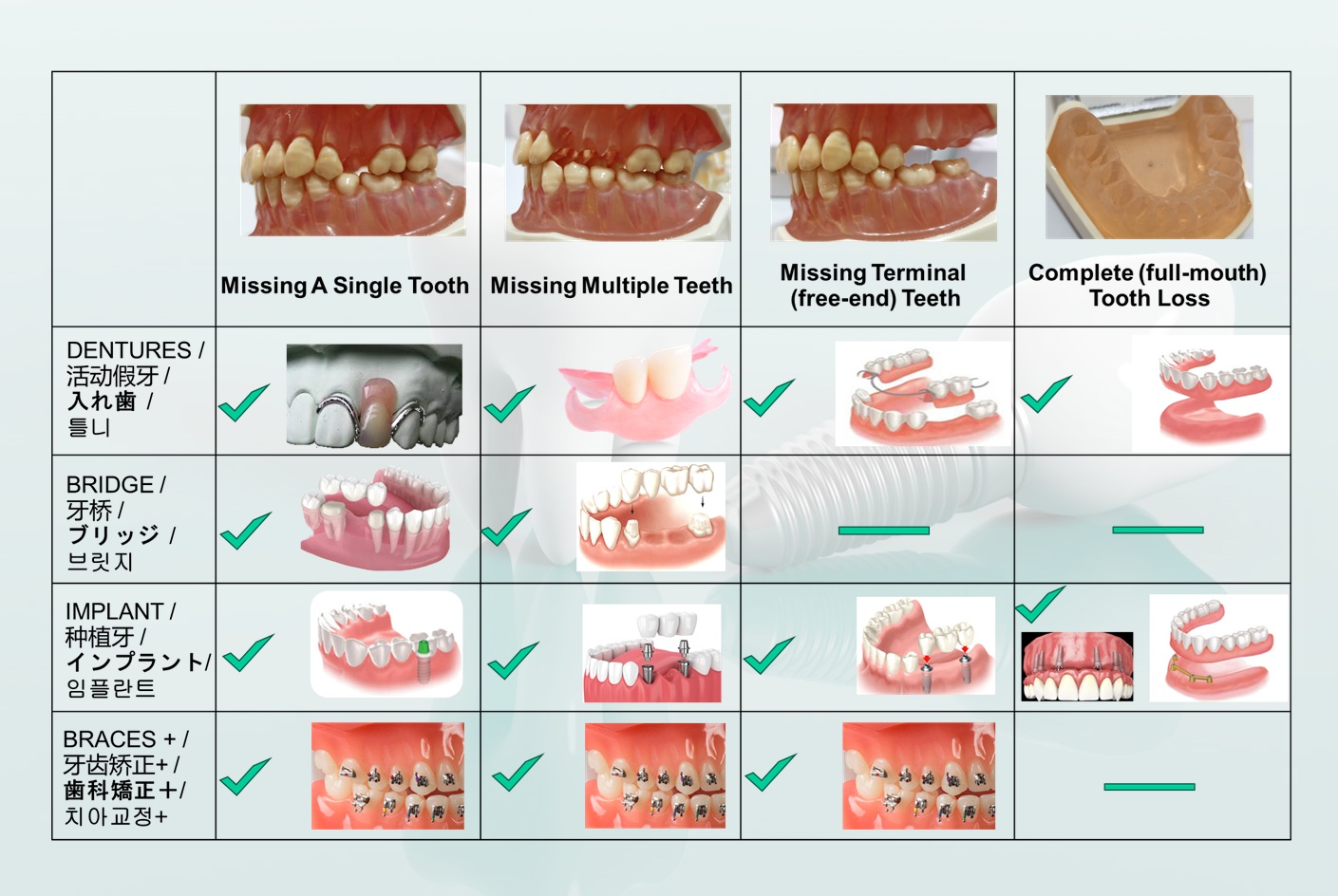
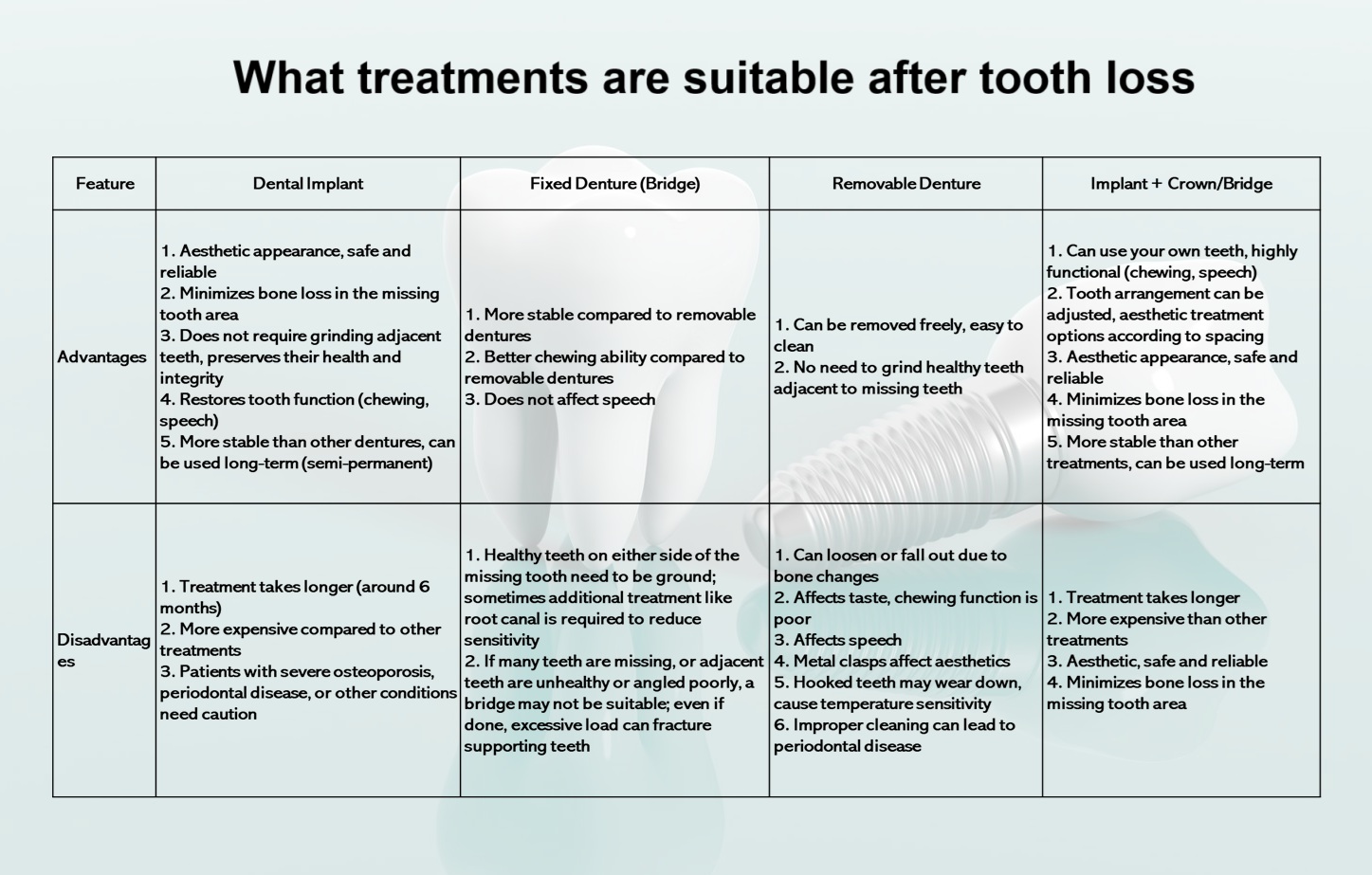
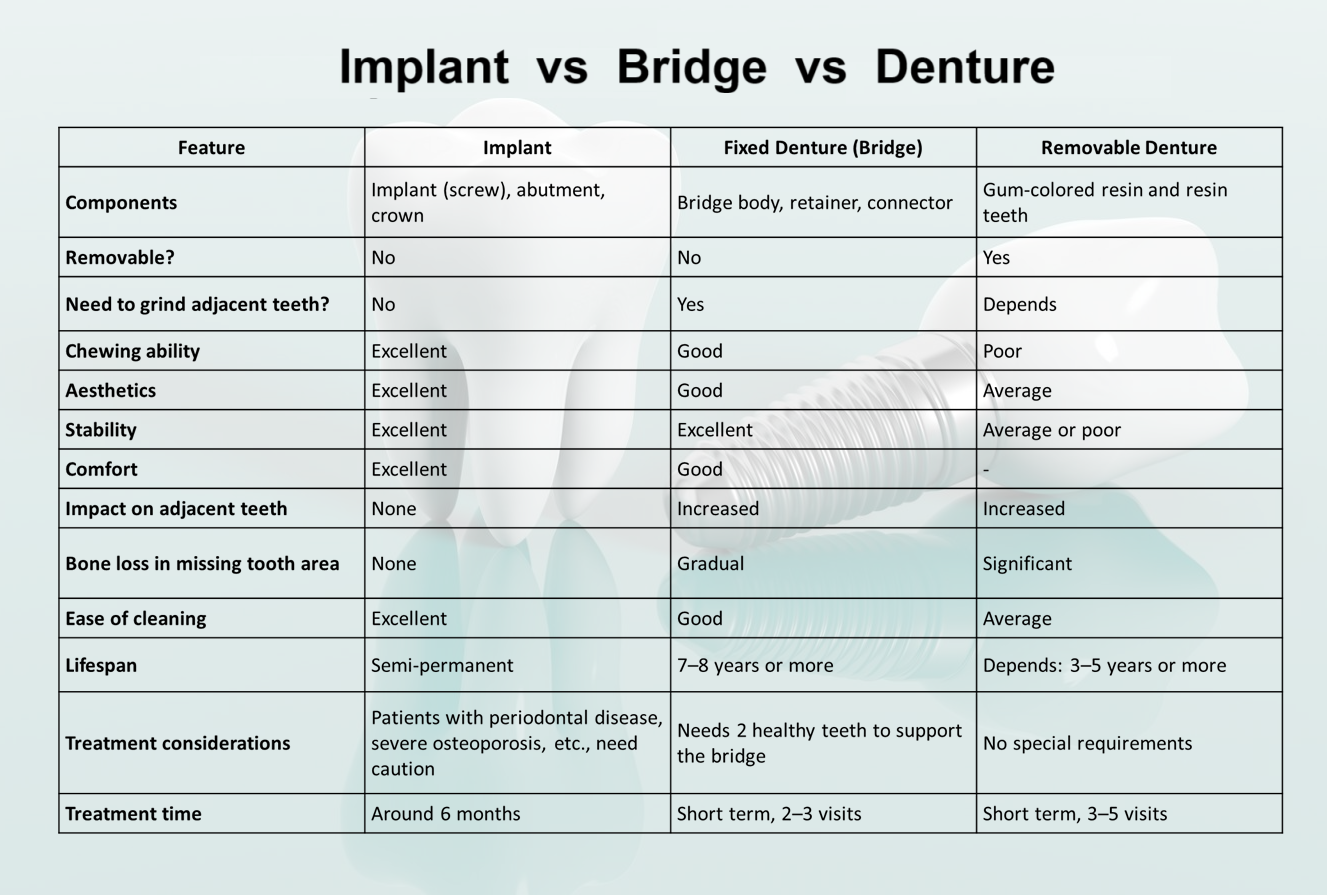
Dental Implant Combined with Orthodontic Treatment
When the dental implant is placed into the alveolar bone, the dentist may recommend dental implants combined with orthodontic treatment in the following situations:
-
Limited space for implant placement.
-
Desire to reduce the number of implants needed.
-
Long-term changes in the tooth alignment after extraction of a molar, such as neighboring teeth tilting or opposing teeth extruding.
Dental Implant with Bone Grafting
If a missing tooth is improperly restored, it can lead to alveolar bone resorption, or the jawbone may have insufficient bone volume (not thick enough) to support an implant.
In such cases, the dentist may recommend dental implants combined with bone grafting.
Full Mouth Dental Implants
Patients with severe periodontal disease, or those who have lost all their teeth due to trauma or accidents, resulting in a completely toothless mouth, may be candidates for full mouth dental implants.
Combination of Dental Implants and Removable Dentures (Button-Snap Overdenture)
Patients using traditional dentures often experience alveolar bone resorption, causing the jawbone to shrink. This can lead to denture displacement and looseness.
If the alveolar bone is healthy, a small number of implants can be placed in the jawbone as supporting anchors. By combining these implants with a magnetic or button-snap removable denture, it not only helps slow down bone loss, but also improves chewing function.
Compared to full-mouth dental implants, button-snap overdentures are a more cost-effective solution.
Precautions Before Dental Implant Surgery
-
Examinations
-
Take X-rays and undergo a precise dental examination.
-
Complete a thorough periodontal cleaning.
-
-
Health and Lifestyle
-
Avoid colds, smoking, and alcohol before surgery.
-
Women should avoid scheduling surgery during their menstrual period.
-
Do not fast before surgery.
-
-
Medical History
-
Patients with hypertension, diabetes, coronary heart disease, or other conditions should bring past medical records and a list of current medications.
-
Discuss your medical history in detail with your treating doctor.
-
Postoperative Precautions After Dental Implant Surgery
- Immediately After Surgery: Bite gently on gauze; do not rinse or spit.
- Oral Hygiene: Brushing can resume 24 hours after surgery. Use antiseptic mouthwash after 24 hours as directed.
- Lifestyle Restriction: Do not smoke or drink alcohol after surgery.
- Dietary Guideline: Eat soft or semi-liquid foods starting 2 hours after surgery. Avoid very hot or spicy foods.
- Medication: If swelling or pain occurs, take anti-inflammatory, analgesic, or antibiotic medications as prescribed by your dentist.
- Rest and Activity: Ensure adequate sleep and rest. Avoid strenuous exercise.
- Suture Removal: Sutures are typically removed 7–10 days after surgery. Timely removal helps prevent wound infection.